News Letter


Less Stickiness, More Softness, No Pilling 2μm Transparent Silica, SUNSIL-LUX20
- By
- Jay Lee, Dongbok Kim
- Translated by
- Sujin Ryu
- September
- 2026, No.38
Hello, This is Sunjin Beauty Science.
The wait is finally over. SUNSIL-LUX20 is here.
Since its first introduction at In-cosmetics Korea, SUNSIL-LUX20 has received a great deal of attention and interest. This time, we would like to explore the reason behind it through the lens of “sensory performance in transparent formulations.”
Clear serums, ampoules, soothing gels, gel creams, transparent sun primers, and other transparent formulations loved by K-Beauty all share a common challenge:
“How can we achieve transparency without stickiness and prevent pilling during application?”
When water-based thickeners such as carbomer are used to build viscosity in transparent formulations, the desired viscosity can be achieved, but this can introduce new challenges in terms of sensory feel.
Adding silica to achieve a powdery finish and oil absorption brings additional considerations, including whitening and pilling.
SUNSIL-LUX20 was developed to address exactly this challenge.
Want to add silica to a transparent formulation but concerned about stickiness, pilling, and stability?
Silica is widely used in cosmetic formulations to absorb excess oil and sweat, providing a fresh, soft, and powdery finish while helping to smooth and refine the appearance of the skin. However, things can be different when incorporating silica into clear and transparent gel or serum formulations.
Increasing viscosity with a water-based thickener may result in increased stickiness, while adding silica can lead to pilling or reduced transparency. In addition, as formulation trends increasingly move toward reducing the use of emulsifiers, formulation stability has also become an important consideration.
So, is it possible to maintain transparency while reducing stickiness and pilling, all while achieving the fresh, smooth sensory benefits of silica?
Challenge 1. Stickiness and Pilling
When water-based thickeners such as carbomer are used to increase the viscosity of transparent formulations, they can also result in a sticky or tacky skin feel.
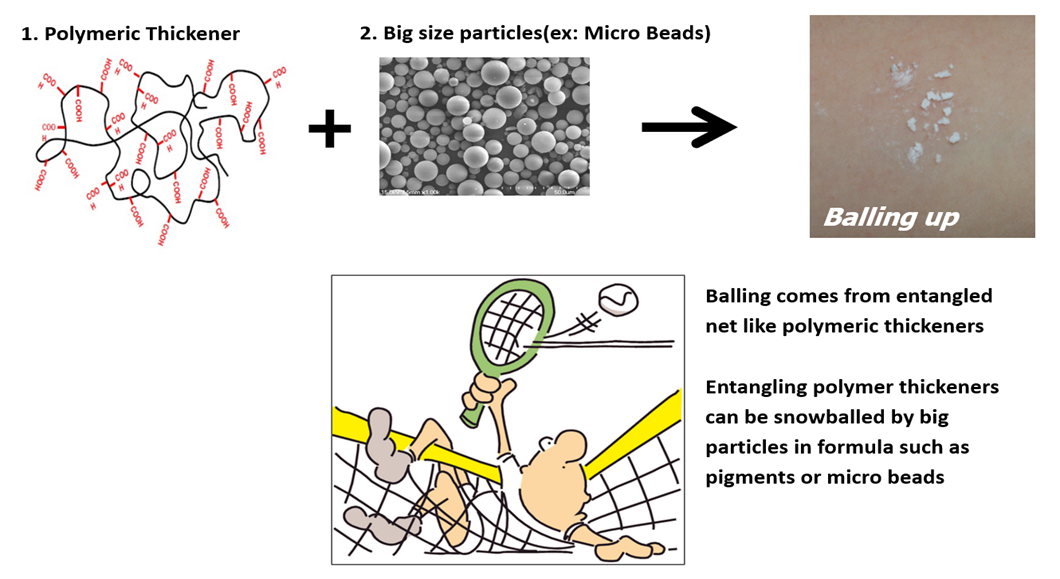
Adding silica to achieve a soft, powdery finish can further lead to particle agglomeration during rubbing, depending on how well the silica is dispersed in the formulation, potentially resulting in pilling. This can be particularly noticeable in transparent formulations, where the appearance of white particles rolling or forming on the skin is more visible.
“Is it possible to achieve a soft, powdery finish while reducing stickiness and pilling?
Challenge 2. Loss of Transparency
Another important challenge is the cloudiness that can occur when silica is incorporated into clear and transparent formulations.
Differences in the refractive index between the silica particles and the formulation, as well as particle agglomeration, can increase light scattering and ultimately reduce the transparency of the formulation.
This is particularly important for formulations such as transparent soothing gels, clear serums, and transparent sun primers, where “clarity itself is part of the product’s value.” In these formulations, it is essential to consider not only the sensory feel but also the visual transparency of the final product.
Challenge 3. New Emulsification Systems
Recently, there has been a growing trend toward reducing the use of emulsifiers or adopting new emulsification systems in formulation development.
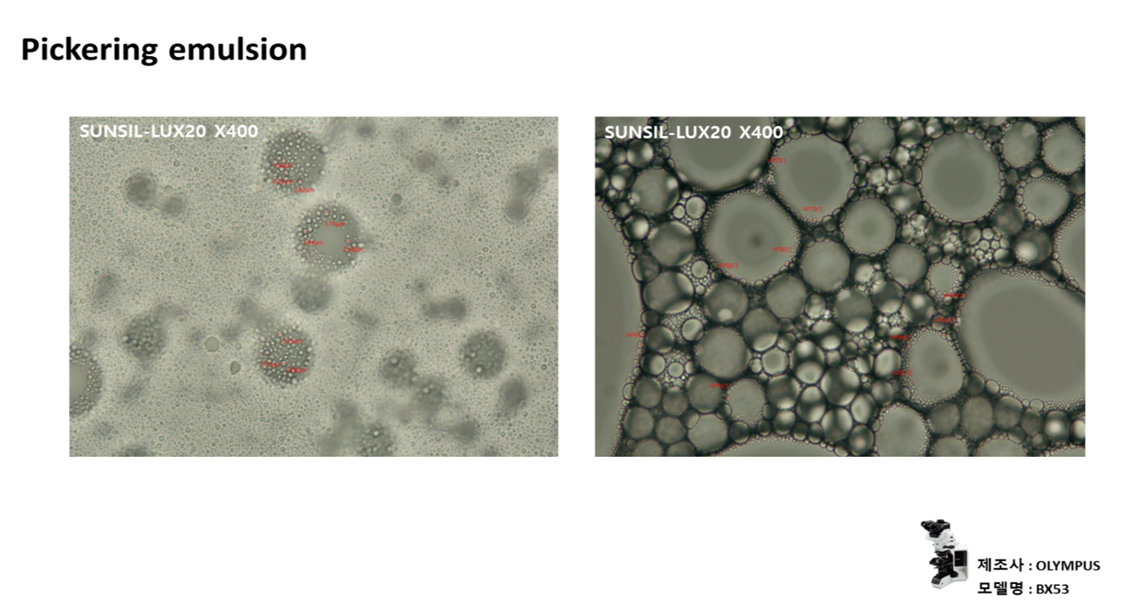
One such approach is Pickering stabilization. In this system, solid particles position themselves at the interface between the oil and water phases, helping to stabilize the emulsion.
With the right type of silica, Pickering stabilization can reduce the amount of conventional emulsifiers required while opening up new possibilities for innovative formulation design.
[Sunjin's Solution] Keep the 2 μm Particle Size, Redesign the Surface
The key to SUNSIL-LUX20 is not changing the particle size, but redesigning the surface of the particles.
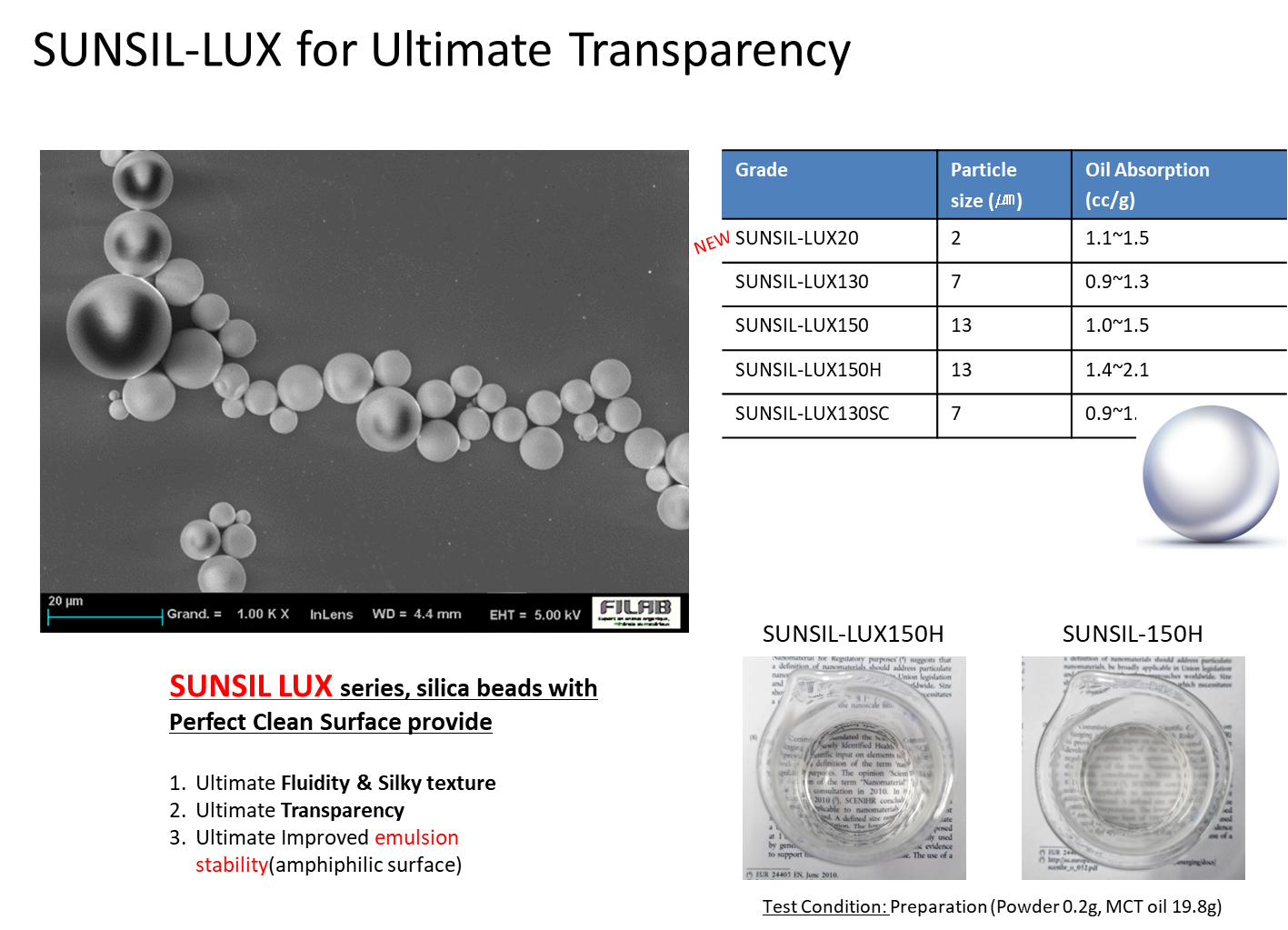
The particle sizes of the existing SUNSIL-20 and SUNSIL-LUX20 are virtually identical.
SUNSIL-20: D50 2.3 μm
SUNSIL-LUX20: D50 2.4 μm
In other words, even particles in the same 2 μm size range can exhibit different behaviors in formulations depending on their surface design.
LUX Surface Technology
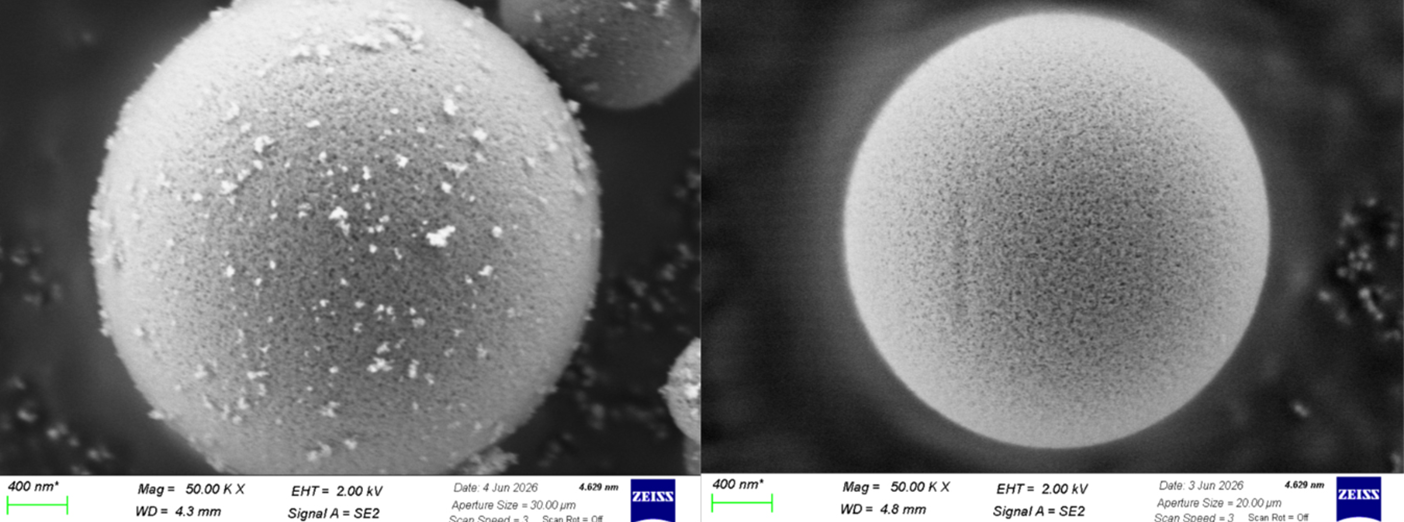
FE-SEM analysis also confirms distinctive surface characteristics that differentiate SUNSIL-LUX20 from the existing SUNSIL-20.
This surface design helps control the dispersion and agglomeration behavior of particles within the formulation, which can ultimately contribute to improved transparency and sensory performance.
[FE-SEM Comparison Image]
Left: SUNSIL-20 / Right: SUNSIL-LUX20
<Benefits>
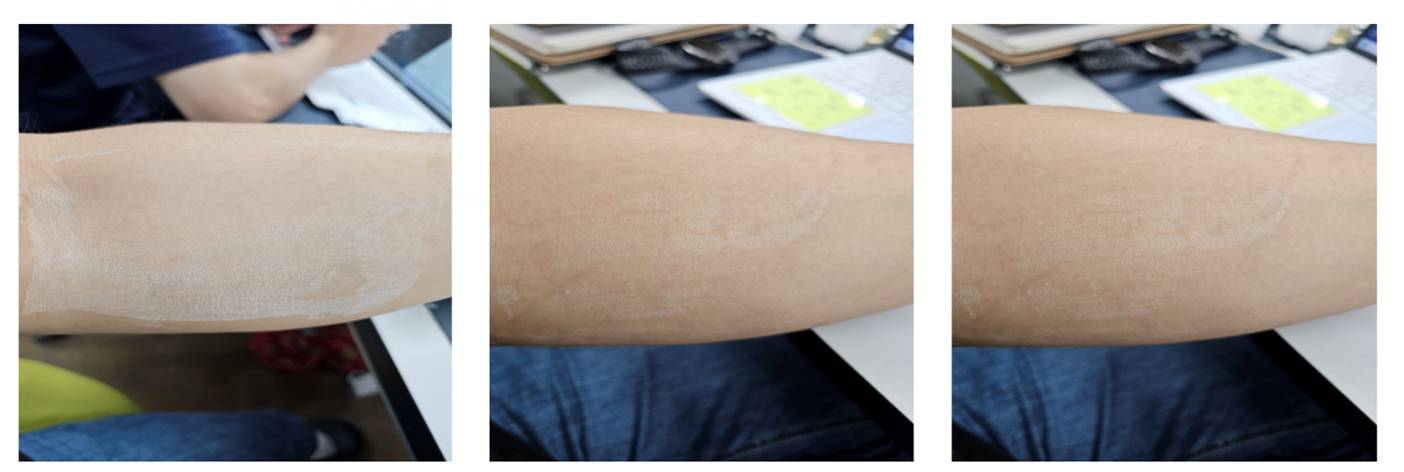
Benefit 1. Reduced Pilling During Rubbing
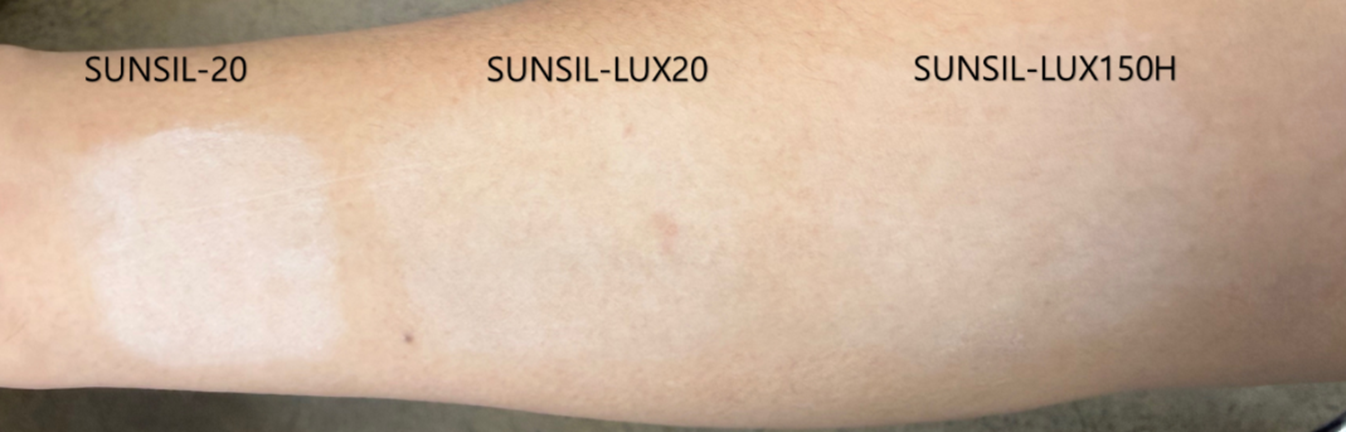
A balling test was conducted by adding 3% silica to 20 g of a 2% carbomer solution.
Even under the same conditions with 2 μm-class particles, SUNSIL-LUX20 showed a significant reduction in pilling compared to SUNSIL-20.
[Balling Test Image]
Left: SUNSIL-20 / Center: SUNSIL-LUX20 / Right: SUNSIL-LUX150H
Even silica particles of similar size can exhibit different dispersion and sensory behavior in formulations depending on their surface characteristics.
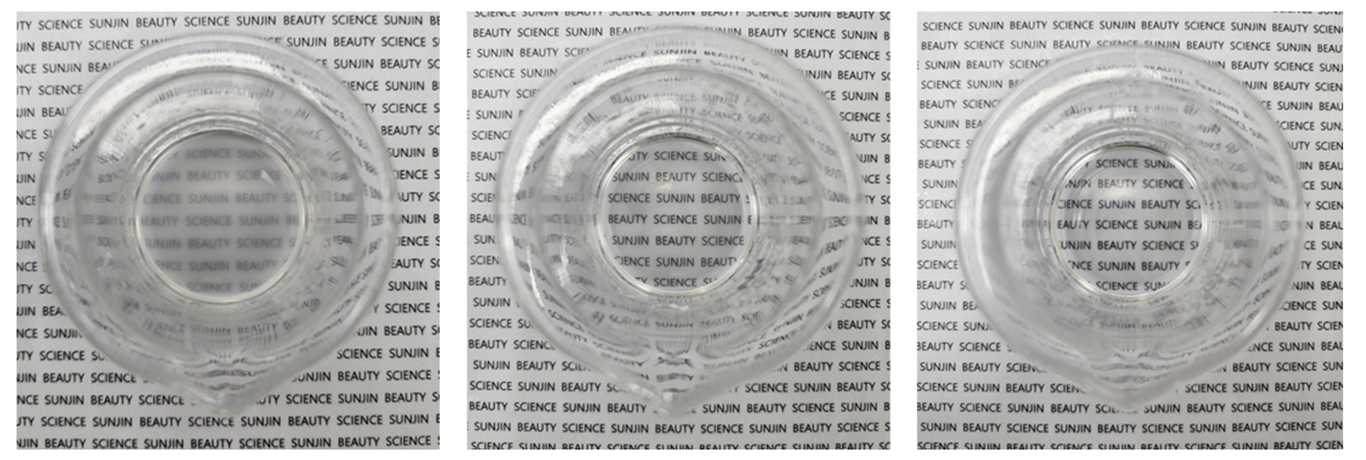
Benefit 2. Transparent Silica for Clear Formulations
To compare transparency, 1 g of silica was dispersed in 19 g of MCT oil.
Under the same conditions, SUNSIL-LUX20 demonstrated a visibly clear appearance that could be clearly observed with the naked eye.
[Transparency Test Image]
MCT Oil 19 g + Silica 1 g
Left: SUNSIL-20 / Center: SUNSIL-LUX20 / Right: SUNSIL-LUX150H
These results demonstrate its potential for use in skincare formulations where a clear, transparent appearance is important, such as transparent soothing gels, clear serums, and gel creams.
Benefit 3. Reduced Stickiness, While Maintaining a Smooth, Moisturizing Feel
Another important factor in transparent formulations is sensory performance.
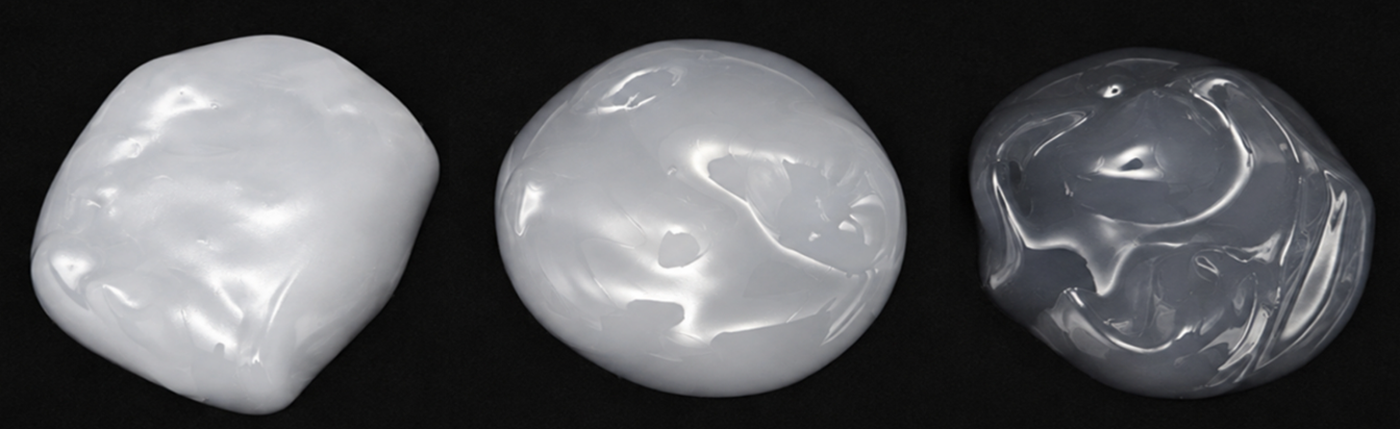
A sensory evaluation was conducted by post-adding SUNSIL-LUX20 to a 0.2% carbomer clear gel.
<1% Post-Addition>
While SUNSIL-20 provided a relatively powdery finish after the initial hydrating feel, SUNSIL-LUX20 maintained a moisturizing feel while delivering a smoother and softer skin feel.
[Sensory Evaluation Image]
From left: SUNSIL-20 / SUNSIL-LUX20 / SUNSIL-LUX150H
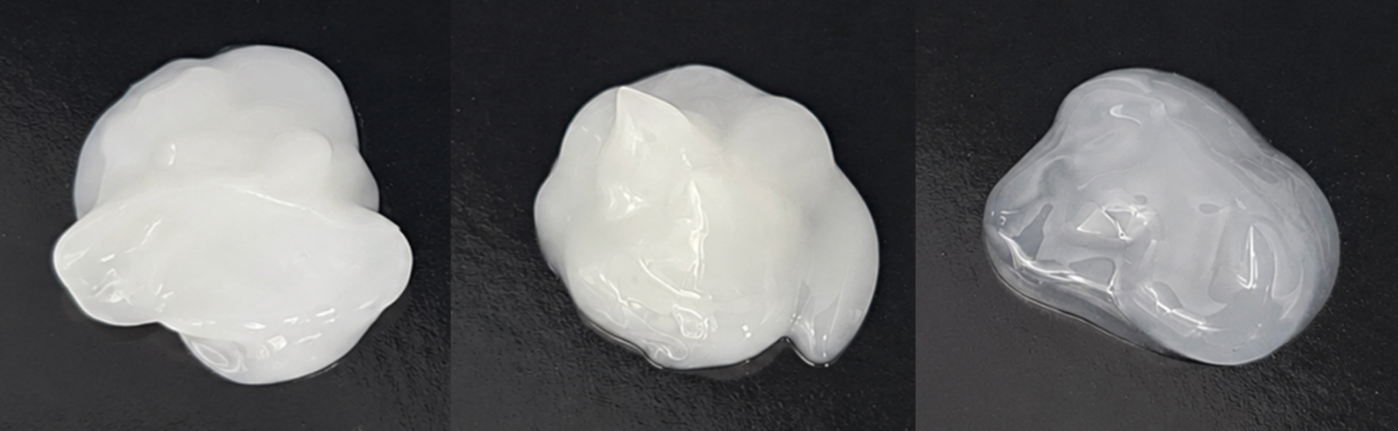
<2% Post-Addition>
At the 2% addition level, the difference was even more pronounced.
SUNSIL-LUX20 showed a tendency to maintain a moisturizing and nourishing feel while improving spreadability.
[Sensory Evaluation Image]
What you want from a transparent gel formulation is more than just a “powdery finish.”
It is about achieving the right balance of lightweight spreadability, reduced stickiness, and an appropriate level of lasting moisturization on the skin.
SUNSIL-LUX20 was developed with this balance in mind.
Benefit 4. Unlock New Formulation Possibilities with Pickering Emulsions
SUNSIL-LUX20 demonstrates the potential for Pickering stabilization through its amphiphilic behavior, allowing the particles to position themselves at the interface between the oil and water phases.
This can open up various formulation possibilities, including low-emulsifier formulations, the design of novel emulsification systems, and formulation development aligned with clean beauty concepts.
[Pickering Test Image]
D5 9 g + Water 9 g + Silica 2 g
Optimization is required depending on the formulation composition and processing conditions for actual formulation applications.

Maintain Transparency, Transform the Sensory Experience.
SUNSIL-LUX20 was developed to deliver a fresh, smooth sensory experience to transparent skincare formulations through its fine particle size and newly designed surface. It is particularly suitable for oily and normal skincare formulations where reduced oiliness and stickiness, along with a lightweight finish, are desired.
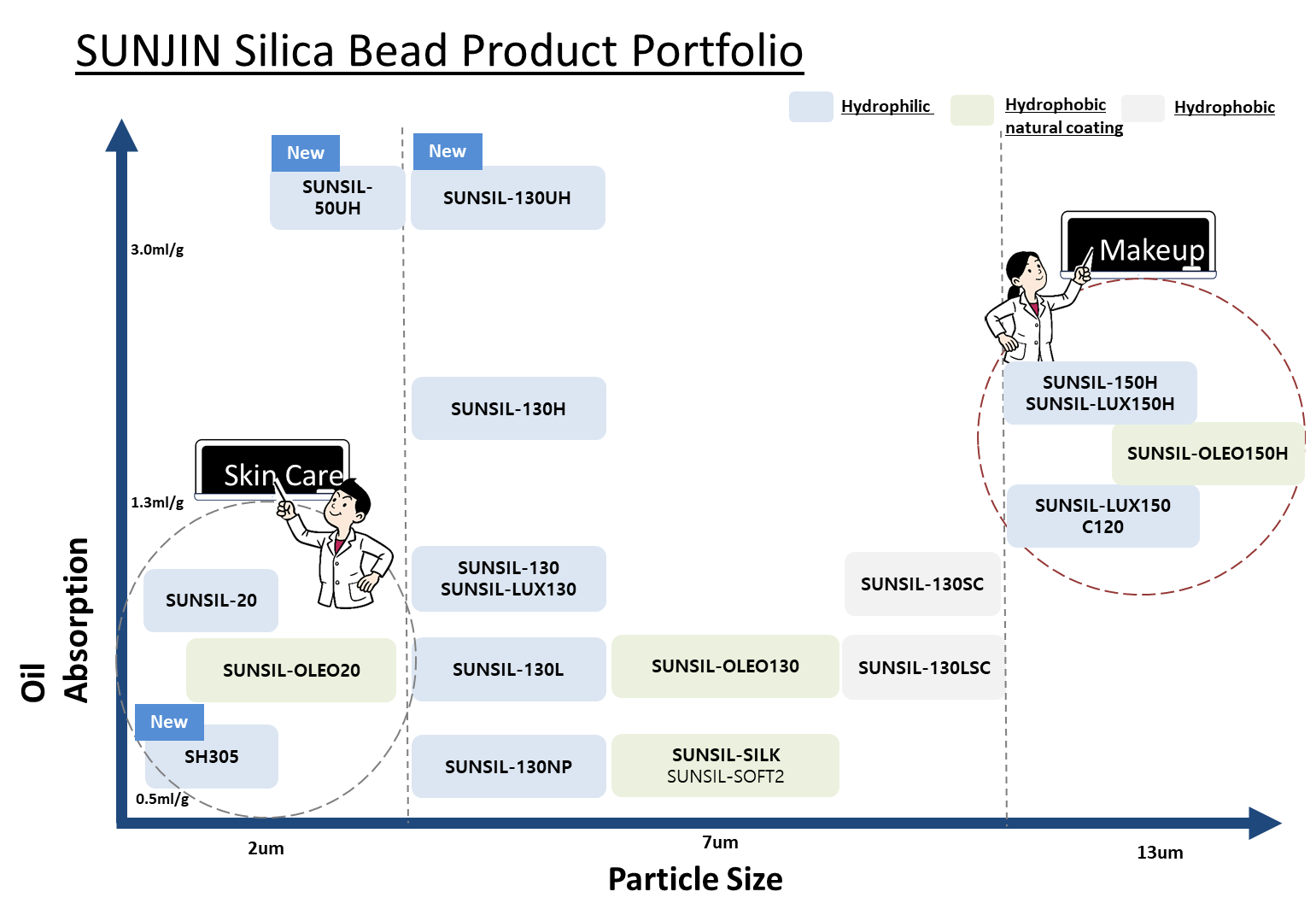
But the role of silica does not end there. Since its functionality and sensory performance in a formulation can vary depending on particle size, oil absorption capacity, and surface characteristics, selecting the right silica for the intended formulation is essential.
Sunjin Beauty Science offers a broad range of silica products with various particle sizes and characteristics, including SUNSIL-LUX20, providing tailored solutions for a wide range of formulation needs—from transparent skincare formulations to oil absorption, powdery finishes, and texture enhancement.
Different formulations require different types of silica. Discover the SUNSIL solution designed for your formulation.
SUNJIN SILICA – SUNSIL Q&A
Q1. Is there a silica suitable for transparent skincare formulations?
A. We recommend SUNSIL-LUX20 from Sunjin Beauty Science. It is a silica with a newly designed surface while maintaining a fine particle size of approximately 2 μm. It is well suited for transparent skincare formulations such as clear serums, ampoules, soothing gels, and gel creams, where transparency is important, helping to deliver a fresh and smooth sensory experience.
Q2. Can SUNSIL-LUX20 reduce the stickiness of carbomer gels and pilling caused by silica?
A. SUNSIL-LUX20 can be incorporated into carbomer-based clear gels to help reduce stickiness and an oily feel, delivering a fresher sensory experience. In comparative formulation evaluations under the same carbomer gel conditions, SUNSIL-LUX20 showed a tendency toward reduced pilling compared with the existing SUNSIL-20.
It can therefore be considered when incorporating silica into transparent gels while aiming to minimize pilling during application.
Q3. What is the difference between SUNSIL-LUX20 and the existing SUNSIL-20?
A. The two products have similar particle sizes in the approximately 2 μm range, with a D50 of approximately 2.3 μm for SUNSIL-20 and 2.4 μm for SUNSIL-LUX20. However, they differ in their particle surface characteristics.
LUX20 is not simply a product with smaller particles. Instead, it is a silica designed with a newly engineered, smoother surface while maintaining a particle size of approximately 2 μm.
Q4. How can I select the right SUNSIL silica for my formulation?
A. SUNSIL offers a diverse range of products with different particle sizes, oil absorption capacities, surface characteristics, and lipophilicity.
For transparent skincare formulations, SUNSIL-LUX20 is recommended. For oil-based formulations requiring enhanced lipophilicity, SUNSIL-OLEO20 can be considered. For formulations requiring high oil absorption and texture control, SUNSIL-50UH is another option.
The right product can be selected according to the specific purpose and requirements of each formulation.
Q5. What types of cosmetics can Sunjin Beauty Science's SUNSIL silica be used in?
A. SUNSIL silica can be used in a wide range of cosmetic formulations, from skincare to makeup.
Depending on the desired functionality, SUNSIL products can be selected for oil absorption, reduction of stickiness and oily feel, a powdery finish, soft focus, texture enhancement, and microplastic replacement.
With a diverse portfolio including SUNSIL-LUX20, SUNSIL-OLEO20, and SUNSIL-50UH, we offer customized silica solutions tailored to various cosmetic formulations and applications
Areum Jeong / Regional Sales Manager
E-mail : sales1@sunjinbs.com
E-mail : sales1@sunjinbs.com